Rick Santorum called the president "a snob" for wanting everyone to get a college education (in fact, Obama never actually called for universal college education but only for a year or more of training after high school).
Santorum needn't worry. America is already making it harder for young people of modest means to attend college. Public higher education is being starved, and the middle class will shrink even more as a result.
Over just the last year 41 states have cut spending for public higher education. That's on top of deep cuts in 2009 and 2010. Some public universities, such as the University of New Hampshire, have lost over 40 percent of their state funding; the University of Washington, 26 percent; Florida's public university system, 25 percent.
Rising tuition and fees are making up the shortfall. This year, the average hike is 8.3 percent. New York's state university system is increasing tuition 14 percent; Arizona, 17 percent; Washington state, 16 percent. Students in California's public universities and colleges are facing an average increase of 21 percent, the highest in the nation.
The children of middle and lower-income families are hardest hit. Remember: The median wage has been dropping since 2000, adjusted for inflation.
Pell Grants for students from poor families are falling further behind; they now cover only about a third of tuition and fees. (In the 1980s, they covered about half; in the 1970s, more than 70 percent.)
Student debt is skyrocketing -- the New York Federal Reserve Bank estimates it at $550 billion. Punitive laws enforce repayment, and it's almost impossible to shed student loans in bankruptcy. There is no statute of limitations for non-repayment.
And yet, Santorum's rant notwithstanding, good-paying jobs in America are coming to require a college degree. Globalization and rapid technological change are putting a premium on the ability to identify and solve new problems. A college degree is also a signal to prospective employers that a young person has what it takes to succeed.
That's why the median annual pay of people with a bachelor's degree was 70 percent higher than those with a high school diploma in 2009 (the latest Census data available).
But public higher education isn't just a private investment. It's a public good. Our young people -- their capacities to think, understand, investigate, and innovate -- are America's future.
We used to understand this. During the great expansion of public higher education from the 1950s to the 1970s, tuition at public universities averaged about 4 percent of median family income (compared to around 20 percent at private universities).
Young Americans received college degrees in record numbers -- creating a cohort of scientists, engineers, managers, and professionals that propelled the economy forward and dramatically expanded the middle class.
But starting in the 1980s, as in so many other areas of American life, we took a U-turn. Tuition at public universities began climbing. By 2005, it was more than 10 percent of median annual family income. Now it's approaching 25 percent -- still a good deal relative to private universities (where it's nearly 70 percent), but high enough to discourage many qualified young people from attending.
Public higher education has been the gateway to the middle class but that gate is shutting -- just when income and wealth are more concentrated at the top than they've been since the 1920s, and when America needs the brainpower of its young people more than ever.
This is nuts.
What's the answer? Partly to make public universities more efficient. Every bureaucracy I've ever been associated with (and I've been in some very big ones) has some fat to be trimmed. Yet universities are necessarily labor-intensive enterprises; research and teaching can't be outsourced abroad or turned over to computerized machine tools.
Another part of the answer is to raise tuition and fees for students from higher-income families and use the extra money to subsidize medium and lower-income kids. Even now relatively few pay the official sticker price; many receive some discount proportional to family income. But this won't solve the underlying problem, either.
A big part of the answer has to be more government support for public education at all levels. This requires more tax revenues -- especially from Americans who are best able to pay.
Most Americans still believe in the ideal of equal opportunity. And most harbor the patriotic notion that we have responsibilities to one another as members of the same society.
The two principles lead to an obvious conclusion: America's richest citizens have a duty to pay more taxes so kids from middle and lower-income families have chance to make it in America.
A pending initiative in California would raise taxes on millionaires and use the proceeds to fund public education at all levels. It's a good idea, and it comes at the right time. Other states should follow.
Robert Reich
Wednesday, February 29, 2012


Monday, February 27, 2012
Street gangs now in Suburbs
Chicago gang members are invading the western suburbs.
Gangs have sent juveniles to Riverside to burglarize homes and steal TVs, computers, jewelry, cash and whatever else they could grab.
In Oak Park, River Forest and Forest Park, gang members recently painted graffiti on 30 different locations before they were nabbed.
And in Cicero, police busted a high-ranking Four Corner Hustlers member for possession of heroin.
“The Chicago Police are doing a really good job of pushing the crime west,” said Riverside Police Chief Tom Weitzel, chairman of a 10-suburb gang task force.
It was formed about five years ago when Berwyn, Brookfield, Cicero, Elmwood Park, Forest Park, North Riverside, Oak Park, River Forest, Riverside and Stickney began to see the “toothpaste” effect. Chicago Police were applying pressure to gangs and like a tube of toothpaste, they were getting squeezed to the suburbs.
Last year, Chicago Police Supt. Garry McCarthy declared war on the Maniac Latin Disciples and the Spanish Cobras after MLDs allegedly killed two little girls and Cobras allegedly killed an off-duty Chicago cop.
“In the last year, things have really picked up,” Weitzel said. “We attribute that to the full-court press on gangs by the Chicago Police.”
Cook County Sheriff’s Supt. Frank Diaz, who runs the criminal intelligence unit in the jail, said another reason for the exodus of gangs to the suburbs is that more members are getting out of prison and being placed on “intensive gang probation.”
They’re prohibited from returning to their old neighborhoods and aren’t comfortable in rival gang territory in Chicago. So they relocate to the suburbs, where they’re safer and the cops don’t initially know them.
Weitzel said the demolition of Chicago public-housing units displaced gang members to the western suburbs.
And many Chicago gang members have chosen to drive to the suburbs to do “deals on wheels” because they’re afraid of having their drug transactions captured on Chicago’s public surveillance cameras, Diaz said.
The task force — called WEDGE for West Suburban Directed Gang Enforcement — made 105 felony arrests last year, compared to 49 in 2009. Its gang-related missions, everything from traffic stops to monitoring summer festivals, were up 66 percent last year compared to 2010, Weitzel said.
Before the task force was launched, the 10 suburbs didn’t readily share information, Weitzel said. Now the task force’s 22 officers have access to the other departments’ crime databases and communicate on the same radio frequencies.
The task force is asking for permission to communicate on Chicago Police Department radio frequencies when they enter Chicago for investigations, Weitzel said.
Task force members have been working with the U.S. Marshals Service to chase down fugitive gang members. They also team with the Illinois Department of Corrections to conduct home visits of parolees to see whether they’re following the conditions of their release, Weitzel said.
More and more, gang members and their extended families have resettled from Chicago to Riverside, a picturesque town of almost 9,000 residents, Weitzel said.
The village, founded in 1875, was designed by Frederick Law Olmsted — known as the father of landscape architecture.
Riverside calls itself the “Village in the Forest.”
Weitzel said the quiet village — like most of the other towns in the task force — was unprepared for the influx of gang members several years ago.
The village was forced to pass an ordinance requiring businesses to remove gang graffiti within seven days, Weitzel said. Even the bridge crossing the Des Plaines River near the police department is a regular target of such graffiti, Weitzel said.
But that’s not all.
In recent years, police have busted gang members selling dope outside Riverside Brookfield High School, but Weitzel said police have not seen that problem in the last six months.
Perhaps most disturbing was the burglary ring the task force busted, he said.
Chicago gang leaders sent juveniles to Riverside to knock on doors. If someone answered, they’d ask for “John” and would politely leave when the resident said John didn’t live there.
Then they would go to another house, and if someone didn’t answer the door, they’d kick it in and burglarize the place.
When they were caught, the juveniles admitted they were Chicago gang members and told police they didn’t care about getting arrested because they wouldn’t do any time behind bars.
They were right.
They were released and did the same thing in Forest Park, where they were re-arrested for burglary, Weitzel said.
“We asked them why they were coming to Riverside and they said it was an affluent community and they were getting better proceeds here,” he said.
Weitzel said the task force is now conducting long-term investigations, using court-authorized telephone overhears, to build cases to “keep these people out of here permanently.”
The Chicago Police Department recognizes “that across the country, gangs try to expand their presence and tend to gravitate to locations that they believe they can operate with less scrutiny — and the Chicagoland area is no different,” said Chicago Police spokeswoman Melissa Stratton.
“But simply pushing crime out — the bubble effect — is not what our goal is. We work relentlessly to address conditions in the areas that gangs operate in to increase the safety of communities across our city, and assist fellow law enforcement agencies with access to our CLEAR system and by holding gang information sharing meetings,” she said.
Sunday, February 12, 2012
Good Bye Whitney.

Whitney Houston’s Tumultuous Final Days
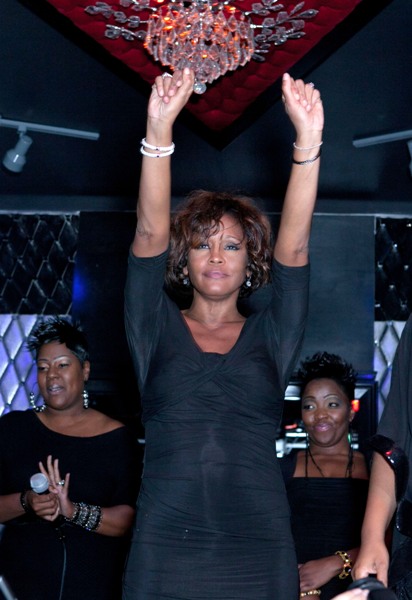 (Gabriel Olsen/FilmMagic)
 LOS ANGELES (AP) -- Whitney Houston, who ruled as pop music's queen until her majestic voice was ravaged by drug use and her regal image was tarnished by erratic behavior and a tumultuous marriage to singer Bobby Brown, has died on the eve of the Grammy Awards she once reigned. She was 48.
Houston was pronounced dead Saturday afternoon in her room on the fourth floor of the Beverly Hilton, Beverly Hills police Lt. Mark Rosen said. "There were no obvious signs of any criminal intent," he said.Search: Watch Whitney Houston videos
The cause of death was unknown, said Houston's publicist, Kristen Foster.Houston's death came on the night before music's biggest showcase, the Grammys. She will be remembered Sunday in a tribute by Jennifer Hudson, organizers said. Houston had been at rehearsals for the show Thursday, coaching singers Brandy and Monica, according to a person who was at the event but was not authorized to speak publicly about it. The person said Houston looked disheveled, was sweating profusely and liquor and cigarettes could be smelled on her breath.
At her peak, Houston was the golden girl of the music industry. From the mid-1980s to the late 1990s, she was one of the world's best-selling artists. She wowed audiences with effortless, powerful and peerless vocals rooted in the black church but made palatable to the masses with a pop sheen.Her success carried her beyond music to movies, where she starred in hits like "The Bodyguard" and "Waiting to Exhale."
She had the perfect voice and the perfect image: a gorgeous singer who had sex appeal but was never overtly sexual, who maintained perfect poise.
She influenced a generation of younger singers, from Christina Aguilera to Mariah Carey, who when she first came out sounded so much like Houston that many thought it was Houston.
Photos: In Memoriam: Whitney Houston
But by the end of her career, Houston became a stunning cautionary tale of the toll of drug use. Her album sales plummeted and the hits stopped coming; her once serene image was shattered by a wild demeanor and bizarre public appearances. She confessed to abusing cocaine, marijuana and pills, and her once pristine voice became raspy and hoarse, unable to hit the high notes as she had during her prime."The biggest devil is me. I'm either my best friend or my worst enemy," Houston told ABC's Diane Sawyer in an infamous 2002 interview with then-husband Brown by her side.
It was a tragic fall for a superstar who was one of the top-selling artists in pop music history, with more than 55 million records sold in the United States alone.
Her longtime mentor, Clive Davis, went ahead with his annual concert Saturday at the same hotel where her body was found. He dedicated the evening to her and asked for a moment of silence. Houston was supposed to appear at the gala.
Aretha Franklin, her godmother, said she was stunned.
On Facebook: Share your thoughts about Whitney Houston "I just can't talk about it now," Franklin said in a short statement. "It's so stunning and unbelievable. I couldn't believe what I was reading coming across the TV screen."
Houston seemed to be born into greatness. In addition to being Franklin's goddaughter, she was the daughter of gospel singer Cissy Houston and the cousin of 1960s pop diva Dionne Warwick.
She first started singing at the New Hope Baptist Church in Newark, N.J., as a child. At the church on Sunday morning, a couple of sympathy cards were tied to a fence post. "To the greatest songstress ever," one said, and tied next to it was a small bouquet of fresh flowers.The pastor asked for strength for Houston's family, said churchgoer Shawn Cooper, 32, of Newark. He said he hadn't regularly attended church but felt compelled to go on this Sunday.
"The Houston family means a lot to this community, they have done a lot for this community, and being there for them is the best thing we can do as a community," he said.
Related: Celebs react to Houston's death
In her teens, Houston sang backup for Chaka Khan, Jermaine Jackson and others, in addition to modeling. It was around that time when music mogul Clive Davis first heard Houston perform.
"The time that I first saw her singing in her mother's act in a club ... it was such a stunning impact," Davis told "Good Morning America.""To hear this young girl breathe such fire into this song. I mean, it really sent the proverbial tingles up my spine," he added.
Before long, the rest of the country would feel it, too. Houston made her album debut in 1985 with "Whitney Houston," which sold millions and spawned hit after hit. "Saving All My Love for You" brought her her first Grammy, for best female pop vocal. "How Will I Know," "You Give Good Love" and "The Greatest Love of All" also became hit singles.
Another multiplatinum album, "Whitney," came out in 1987 and included hits like "Where Do Broken Hearts Go" and "I Wanna Dance With Somebody."
Her decision not to follow the more soulful inflections of singers like Franklin drew criticism by some who saw her as playing down her black roots to go pop and reach white audiences. The criticism would become a constant refrain through much of her career. She was even booed during the "Soul Train Awards" in 1989.
"Sometimes it gets down to that, you know?" she told Katie Couric in 1996. "You're not black enough for them. I don't know. You're not R&B enough. You're very pop. The white audience has taken you away from them."
Some saw her 1992 marriage to former New Edition member and soul crooner Bobby Brown as an attempt to respond to those critics. It seemed to be an odd union; she was seen as pop's pure princess while he had a bad-boy image and already had children of his own. (The couple had one daughter, Bobbi Kristina, born in 1993.) Over the years, he would be arrested several times, on charges including DUI and failure to pay child support.
But Houston said their true personalities were not as far apart as people may have believed."When you love, you love. I mean, do you stop loving somebody because you have different images? You know, Bobby and I basically come from the same place," she told Rolling Stone in 1993. "You see somebody, and you deal with their image, that's their image. It's part of them, it's not the whole picture. I am not always in a sequined gown. I am nobody's angel. I can get down and dirty. I can get raunchy."
Brown was getting ready to perform at a New Edition reunion tour in Southaven, Miss., as news spread about Houston's death. The group went ahead with its performance, though Brown appeared overcome with emotion when his voice cracked at the beginning of a ballad and he left the stage.
Before his departure, he told the sell-out crowd: "First of all, I want to tell you that I love you all. Second, I would like to say, I love you, Whitney. The hardest thing for me to do is to come on this stage."
Brown said he decided to perform because fans had shown their loyalty to the group for more than 25 years. During an intermission, one of Houston's early hits, "You Give Good Love," played over the speakers. Fans stood up and began singing along.
It would take several years for the public to see the "down and dirty" side of Houston. Her moving 1991 rendition of "The Star Spangled Banner" at the Super Bowl, amid the first Gulf War, set a new standard and once again reaffirmed her as America's sweetheart.
In 1992, she became a star in the acting world with "The Bodyguard." Despite mixed reviews, the story of a singer (Houston) guarded by a former Secret Service agent (Kevin Costner) was an international success.
It also gave her perhaps her most memorable hit: a searing, stunning rendition of Dolly Parton's "I Will Always Love You," which sat atop the charts for weeks. It was Grammy's record of the year and best female pop vocal, and the "Bodyguard" soundtrack was named album of the year.
She returned to the big screen in 1995-96 with "Waiting to Exhale" and "The Preacher's Wife." Both spawned soundtrack albums, and another hit studio album, "My Love Is Your Love," in 1998, brought her a Grammy for best female R&B vocal for the cut "It's Not Right But It's Okay."But during these career and personal highs, Houston was using drugs. In an interview with Oprah Winfrey in 2009, she said by the time "The Preacher's Wife" was released, "(doing drugs) was an everyday thing. ... I would do my work, but after I did my work, for a whole year or two, it was every day. ... I wasn't happy by that point in time. I was losing myself."
In the interview, Houston blamed her rocky marriage to Brown, which included a charge of domestic abuse against Brown in 1993. They divorced in 2007.Houston would go to rehab twice before she would declare herself drug-free to Winfrey in 2009. But in the interim, there were missed concert dates, a stop at an airport due to drugs, and public meltdowns.
She was so startlingly thin during a 2001 Michael Jackson tribute concert that rumors spread she had died the next day. Her crude behavior and jittery appearance on Brown's reality show, "Being Bobby Brown," was an example of her sad decline. Her Sawyer interview, where she declared "crack is whack," was often parodied. She dropped out of the spotlight for a few years.
Houston staged what seemed to be a successful comeback with the 2009 album "I Look To You." The album debuted on the top of the charts, and would eventually go platinum.Things soon fell apart. A concert to promote the album on "Good Morning America" went awry as Houston's voice sounded ragged and off-key. She blamed an interview with Winfrey for straining her voice.
A world tour launched overseas, however, only confirmed suspicions that Houston had lost her treasured gift, as she failed to hit notes and left many fans unimpressed; some walked out. Canceled concert dates raised speculation that she may have been abusing drugs, but she denied those claims and said she was in great shape, blaming illness for cancellations.
Houston was to make her return to film in the remake of the classic movie "Sparkle." Filming on the movie, which stars former "American Idol" winner Jordin Sparks, recently wrapped.
Sunday, January 22, 2012
Losing Libraries
Libraries are essential public goods.
Like our public parks and museums, public libraries are free, non-commercial gathering places for everyone, regardless of income. If information is power, then libraries are the essence of democracy and freedom. In these times of economic difficulty, more people are using them than ever, to do more than merely check out books.
Yet our nation's public libraries appear to be under threat by a litany of cuts, forced upon them by state and local committees, cuts that often began before the recent economic downturn. In a survey conducted by the Library Journal, 93% of large libraries reported having laid off staff, cut their opening hours, or both. In several states, including Indiana and Michigan, library branches have permanently closed their doors.
In a new Huffington Post series called Libraries In Crisis, we'll be looking at how today's libraries are about more than books. We'll show how they can be a community resource where reliable information and guidance is provided, free of bias and commercial influence.
This occasional series will look at the economic reasons for the current situation, and its consequences throughout the country. It will showcase models for library evolution, and hear from prominent voices about what makes a viable and vital library system.
As digital media increase in popularity, this is the moment for a national conversation about what a library is, and what it can be, beyond books on shelves; of what we expect from our public services, and how we would like to see our tax revenue spent. When local libraries are threatened, people are prepared to stand up and fight for them, as recently seen in Chicago and Detroit.
In June 2010, New York librarians staged protests against proposed budget cuts totaling $37 million. They called their campaign "We will not be shushed."
The time has come for libraries to speak up.
Like our public parks and museums, public libraries are free, non-commercial gathering places for everyone, regardless of income. If information is power, then libraries are the essence of democracy and freedom. In these times of economic difficulty, more people are using them than ever, to do more than merely check out books.
Yet our nation's public libraries appear to be under threat by a litany of cuts, forced upon them by state and local committees, cuts that often began before the recent economic downturn. In a survey conducted by the Library Journal, 93% of large libraries reported having laid off staff, cut their opening hours, or both. In several states, including Indiana and Michigan, library branches have permanently closed their doors.
In a new Huffington Post series called Libraries In Crisis, we'll be looking at how today's libraries are about more than books. We'll show how they can be a community resource where reliable information and guidance is provided, free of bias and commercial influence.
This occasional series will look at the economic reasons for the current situation, and its consequences throughout the country. It will showcase models for library evolution, and hear from prominent voices about what makes a viable and vital library system.
As digital media increase in popularity, this is the moment for a national conversation about what a library is, and what it can be, beyond books on shelves; of what we expect from our public services, and how we would like to see our tax revenue spent. When local libraries are threatened, people are prepared to stand up and fight for them, as recently seen in Chicago and Detroit.
In June 2010, New York librarians staged protests against proposed budget cuts totaling $37 million. They called their campaign "We will not be shushed."
The time has come for libraries to speak up.
Friday, January 13, 2012
Authors and Writers Beware
Why Self Publishing Authors Are A Target For Conmen


All the indications are that this is going to be another bumper year for self-publishing. However, the ever-increasing viability of this path, and its popularity with writers, is also attracting those seeking to make money from self-publishers.
Writers pursuing the traditional route to publication have had to put up with any number of scams and dodgy deals over the years. We’ve seen vanity and subsidy publishing houses masquerading as conventional publishers, agents who charge all sorts of fees to “represent” your work or push writers towards “editing” services which they either own or receive kickbacks from, and all sorts of nefarious individuals who will claim to get your work under the nose of famous writers, editors, agents, or Hollywood producers – all for a fee, and with little result.
The presence of such conmen is a grim inevitability in an industry where there are so many are fighting for so few slots. Writers rely heavily on organizations such as Writer Beware whose mission is to expose such scams, warn writers when publishing houses are in financial trouble, and educate them on issues such as contracts and copyright.
In general, writers are quite good at taking the time to warn those less experienced of scams and dodgy deals, as well as things which are simply a waste of money.
Self-publishers don’t face the same problem as writers pursuing the traditional path: namely, being one of many competing for (very) limited slots. We don’t have the same bottleneck at the “publishing” stage. However, questionable services are capitalizing on a mystique that has attached itself to the publishing process, squeezing good money out of writers and providing little in return.
There are three major steps for a self-publisher:
1. Writing a good book.
2. Publishing to a professional standard.
3. Marketing effectively.
These services tend to focus on the second step – publishing. The sad thing is that this is the easiest step of the three. Before that cues howls of protest, consider the following. Marketing a book is hard, much harder than the functional steps necessary to publish something to a professional standard, especially when we are talking about e-books.
You can hand someone a set of instructions, which, if followed to the letter, will result in a good looking book. Yes, there is a learning curve for much of it, and many of the tasks (particularly editing and cover design) will need to be outsourced, but it’s something anybody can do, with the right approach and a little investment.
Marketing is much trickier, and successful marketing always involves some element of guesswork and luck. Writing a great book is the hardest task of all, and there is no real blueprint available to the prospective writer. While there are great guidebooks, writing groups, forums, and communities, you are really on your own when it comes to the writing part.
Publishing is easy in comparison.
At least, that’s how it looks to someone who has published four titles. I remember being quite daunted by the process before I published my first. I had a background in digital marketing, I had worked for tech companies, and I knew a little HTML. Someone without any of that may consider the process beyond them.
This has created an opportunity for a variety of self-publishing “services” some okay, some not so. When Penguin launched their vanity-esque self-publishing imprint – Book Country – there was a chorus of disapproval from the self-publishing community. However, I don’t want to single out Penguin. The Book Country deal is a terrible one, but there are far worse out there.
And, frankly, I don’t think any of these “middlemen” self-publishing services are a good idea. The royalty percentages are so favorable in self-publishing precisely because the middlemen have been removed. Once you allow them to reinsert themselves in the process, all that changes.
These services range from charging once-off upfront fees (often significant), to taking an ongoing percentage of your royalties (again, often significant), and, in some cases, even make horrendous rights grabs.
It should be instructive that authors who have already self-published something are rarely tempted by any of these “services” as they know it doesn’t take a genius to find an editor and cover designer, learn how to format your books (or pay someone a small fee to do it), and to upload your books.
Marketing is hard. Writing a good book is harder again. But the publishing part, in comparison, is relatively simple. Perhaps, as self-publishers, we need to do a better job in getting that message out to the wider writing community.
I made the PDF version of Let’s Get Digital a free download on my blog (and Scribd), and it has been downloaded nearly 6,000 times, but I could really do with having a simple one-page run-down of the basics like indie author David Burton has done here.
In fact, if we all had something similar on our blogs, we would be doing the whole writing community a service, keeping them out of the clutches of companies who will squeeze them dry and give little in return.
Self-publishers have done a very good job of arguing for the viability of this path, and many writers have heeded the call. However, now the sharks are circling, we need to get another message out: stay away from these services, protect your royalties, and guard your rights carefully; don’t be afraid to do it all yourself; there is plenty of (free) advice out there and plenty of writers willing to help.
To be clear, I’m not referring to services like Smashwords. They are a distributor/aggregator. For approximately 10% of your cover price, they will distribute you to retailers that are tricky to get into, or impossible on your own. I also have no real issue with some of the newer services that only charge a small upfront fee for a combined formatting, uploading, and distribution service, as they don’t touch your royalties (such as BookBaby.)
While it might be easy for experienced self-publishers to make such a distinction, it’s getting harder and harder for newer writers to do so, which is why I was delighted to hear about a new watchdog site called Indie Beware.
Very much modelled on Writer Beware, it aims to provide a similar service, with a special focus on issues relevant to self-publishers. The writer behind it – Jessica Meigs – is razor sharp, and I have high hopes for the site. It’s only a few days old, but if you have the time, take a moment and pop over to Indie Beware, and tell them the kind of issues you would like covered.
David Gaughran is the author of the South American historical adventure A Storm Hits Valparaiso and the short stories If You Go Into The Woods and Transfection as well as the popular self-publishing guide Let's Get Digital: How To Self-Publish, And Why You Should.
Follow IndieReader on Twitter: @IndieReader
Writers pursuing the traditional route to publication have had to put up with any number of scams and dodgy deals over the years. We’ve seen vanity and subsidy publishing houses masquerading as conventional publishers, agents who charge all sorts of fees to “represent” your work or push writers towards “editing” services which they either own or receive kickbacks from, and all sorts of nefarious individuals who will claim to get your work under the nose of famous writers, editors, agents, or Hollywood producers – all for a fee, and with little result.
The presence of such conmen is a grim inevitability in an industry where there are so many are fighting for so few slots. Writers rely heavily on organizations such as Writer Beware whose mission is to expose such scams, warn writers when publishing houses are in financial trouble, and educate them on issues such as contracts and copyright.
In general, writers are quite good at taking the time to warn those less experienced of scams and dodgy deals, as well as things which are simply a waste of money.
Self-publishers don’t face the same problem as writers pursuing the traditional path: namely, being one of many competing for (very) limited slots. We don’t have the same bottleneck at the “publishing” stage. However, questionable services are capitalizing on a mystique that has attached itself to the publishing process, squeezing good money out of writers and providing little in return.
There are three major steps for a self-publisher:
1. Writing a good book.
2. Publishing to a professional standard.
3. Marketing effectively.
These services tend to focus on the second step – publishing. The sad thing is that this is the easiest step of the three. Before that cues howls of protest, consider the following. Marketing a book is hard, much harder than the functional steps necessary to publish something to a professional standard, especially when we are talking about e-books.
You can hand someone a set of instructions, which, if followed to the letter, will result in a good looking book. Yes, there is a learning curve for much of it, and many of the tasks (particularly editing and cover design) will need to be outsourced, but it’s something anybody can do, with the right approach and a little investment.
Marketing is much trickier, and successful marketing always involves some element of guesswork and luck. Writing a great book is the hardest task of all, and there is no real blueprint available to the prospective writer. While there are great guidebooks, writing groups, forums, and communities, you are really on your own when it comes to the writing part.
Publishing is easy in comparison.
At least, that’s how it looks to someone who has published four titles. I remember being quite daunted by the process before I published my first. I had a background in digital marketing, I had worked for tech companies, and I knew a little HTML. Someone without any of that may consider the process beyond them.
This has created an opportunity for a variety of self-publishing “services” some okay, some not so. When Penguin launched their vanity-esque self-publishing imprint – Book Country – there was a chorus of disapproval from the self-publishing community. However, I don’t want to single out Penguin. The Book Country deal is a terrible one, but there are far worse out there.
And, frankly, I don’t think any of these “middlemen” self-publishing services are a good idea. The royalty percentages are so favorable in self-publishing precisely because the middlemen have been removed. Once you allow them to reinsert themselves in the process, all that changes.
These services range from charging once-off upfront fees (often significant), to taking an ongoing percentage of your royalties (again, often significant), and, in some cases, even make horrendous rights grabs.
It should be instructive that authors who have already self-published something are rarely tempted by any of these “services” as they know it doesn’t take a genius to find an editor and cover designer, learn how to format your books (or pay someone a small fee to do it), and to upload your books.
Marketing is hard. Writing a good book is harder again. But the publishing part, in comparison, is relatively simple. Perhaps, as self-publishers, we need to do a better job in getting that message out to the wider writing community.
I made the PDF version of Let’s Get Digital a free download on my blog (and Scribd), and it has been downloaded nearly 6,000 times, but I could really do with having a simple one-page run-down of the basics like indie author David Burton has done here.
In fact, if we all had something similar on our blogs, we would be doing the whole writing community a service, keeping them out of the clutches of companies who will squeeze them dry and give little in return.
Self-publishers have done a very good job of arguing for the viability of this path, and many writers have heeded the call. However, now the sharks are circling, we need to get another message out: stay away from these services, protect your royalties, and guard your rights carefully; don’t be afraid to do it all yourself; there is plenty of (free) advice out there and plenty of writers willing to help.
To be clear, I’m not referring to services like Smashwords. They are a distributor/aggregator. For approximately 10% of your cover price, they will distribute you to retailers that are tricky to get into, or impossible on your own. I also have no real issue with some of the newer services that only charge a small upfront fee for a combined formatting, uploading, and distribution service, as they don’t touch your royalties (such as BookBaby.)
While it might be easy for experienced self-publishers to make such a distinction, it’s getting harder and harder for newer writers to do so, which is why I was delighted to hear about a new watchdog site called Indie Beware.
Very much modelled on Writer Beware, it aims to provide a similar service, with a special focus on issues relevant to self-publishers. The writer behind it – Jessica Meigs – is razor sharp, and I have high hopes for the site. It’s only a few days old, but if you have the time, take a moment and pop over to Indie Beware, and tell them the kind of issues you would like covered.
David Gaughran is the author of the South American historical adventure A Storm Hits Valparaiso and the short stories If You Go Into The Woods and Transfection as well as the popular self-publishing guide Let's Get Digital: How To Self-Publish, And Why You Should.
Follow IndieReader on Twitter: @IndieReader
Sunday, January 1, 2012
DERRICK SWEAT 3 out in March 2012


Friday, December 16, 2011
For Authors
As authors, you have exactly what you need to make it really big in social media."
So what can you do to make your Facebook page the hub of social media buzz you hoped it would become? The first issue, Amy says, is that "most people give up way too soon," before they have a real chance of attracting fans. "You create a Facebook page. You're so excited about it. You don't see a lot of activity, so you give up." The simple fact is, she says, "you've just got to do the work."
It's not a matter of spending hours and hours each day on Facebook, Amy adds -- it's a matter of staying committed to updating it consistently and frequently, and, most importantly, using your fan page wisely.
There's a formula Amy uses -- one, I should mention, I've adopted for my own pages -- that is almost guaranteed to produce results. It's Amy's 3 C's -- Capture, Connect, and Convert. Here's how it works:
Capture: To get people's attention, you need to create a unique offer for a free "goodie," which can be a content-rich video series, eBook, recorded Webinar, or other. Ideally, you offer this free "goodie" on a custom tab on your Facebook page, and you absolutely must have your fans opt in by providing their email address, in order to get the prize.
At this point, you've gotten people's attention, so your next challenge is to build a relationship with them, which is why the next phase is both the longest and, arguably, the most important.
Connect: This is where you allow people to get to know you. You earn their trust, and become the author they're dying to hear from. This, Amy says, is where authors really shine. This phase is all about offering great content -- the very thing you, as an author, do so well.
The key to creating compelling content, she adds, is the three E's. "Educate, Entertain, and Empower... every single one of your posts should do at least one of these," she explains. "That's how you move a fan to a super fan."
As you create your content, your goal is not to showcase your expertise, but to start a conversation with your fans. Asking questions of your fans, and paying attention to their answers, is critical. People love talking about themselves, so be sure to give fans the attention they inevitably desire. For example, if your fans are repeatedly asking certain questions, or wanting your input on certain issues, create new content around those topic(s). The more you cater to your fans and treat them like friends, the more they'll want to follow you -- and then recommend you to their friends, family, and so on.
Throughout this phase, you also need to get your fans in the habit of interacting with you. While your content at this point is all still free, be sure to consistently make little demands of your fans. Ask them to subscribe to your newsletter, click here to watch your new video, sign up for your free Webinar, and so on. Getting them in the habit of following your lead primes them for the next phase, when you turn fans into customers.
Convert: However daunting this phase may initially sound, if you've invested sufficient time and resources in the Connect phase, this third and final phase is mostly about providing your fans with social proof -- ideally, testimonials.
Because you earned your fans' trust during the Connect phase, they already know and like you. At this point, they just need one extra nudge to pull out their wallets and buy your book, products, services, and programs. Testimonials are the perfect way to accomplish that because they demonstrate how well your products have helped others. Ideally, Amy says, you want to "put your testimonials on your Facebook page... and then tell [your fans] where to buy" your book or other products.
While your Website is your first hub, Amy says, Facebook should be "your number two," because it's where conversations happen. By making yourself and your content available through your Facebook page, you're making it that much easier for fans to follow you--and if my success is any indication, using Amy's three C's -- follow you, they certainly will!
That's a quote from Amy Porterfield, social media expert and co-author of Facebook Marketing for Dummies. It's also encouraging news for us authors, given how many of us still feel angst about social media. Fortunately, Amy shared with me exactly how authors should be using social media to grow our platforms. It's such valuable information, I wanted to be sure to share it with you.
First and foremost, which social media outlet should you focus on, given that there book deadlines to meet, businesses to run, jobs to do, and let's not forget, lives to live? Facebook, Amy says, "is the platform for true engagement." While Twitter, LinkedIn, YouTube, and others can play important roles, Amy explains, Facebook is the one that allows you to really connect with your fans. So what can you do to make your Facebook page the hub of social media buzz you hoped it would become? The first issue, Amy says, is that "most people give up way too soon," before they have a real chance of attracting fans. "You create a Facebook page. You're so excited about it. You don't see a lot of activity, so you give up." The simple fact is, she says, "you've just got to do the work."
It's not a matter of spending hours and hours each day on Facebook, Amy adds -- it's a matter of staying committed to updating it consistently and frequently, and, most importantly, using your fan page wisely.
There's a formula Amy uses -- one, I should mention, I've adopted for my own pages -- that is almost guaranteed to produce results. It's Amy's 3 C's -- Capture, Connect, and Convert. Here's how it works:
Capture: To get people's attention, you need to create a unique offer for a free "goodie," which can be a content-rich video series, eBook, recorded Webinar, or other. Ideally, you offer this free "goodie" on a custom tab on your Facebook page, and you absolutely must have your fans opt in by providing their email address, in order to get the prize.
At this point, you've gotten people's attention, so your next challenge is to build a relationship with them, which is why the next phase is both the longest and, arguably, the most important.
Connect: This is where you allow people to get to know you. You earn their trust, and become the author they're dying to hear from. This, Amy says, is where authors really shine. This phase is all about offering great content -- the very thing you, as an author, do so well.
The key to creating compelling content, she adds, is the three E's. "Educate, Entertain, and Empower... every single one of your posts should do at least one of these," she explains. "That's how you move a fan to a super fan."
As you create your content, your goal is not to showcase your expertise, but to start a conversation with your fans. Asking questions of your fans, and paying attention to their answers, is critical. People love talking about themselves, so be sure to give fans the attention they inevitably desire. For example, if your fans are repeatedly asking certain questions, or wanting your input on certain issues, create new content around those topic(s). The more you cater to your fans and treat them like friends, the more they'll want to follow you -- and then recommend you to their friends, family, and so on.
Throughout this phase, you also need to get your fans in the habit of interacting with you. While your content at this point is all still free, be sure to consistently make little demands of your fans. Ask them to subscribe to your newsletter, click here to watch your new video, sign up for your free Webinar, and so on. Getting them in the habit of following your lead primes them for the next phase, when you turn fans into customers.
Convert: However daunting this phase may initially sound, if you've invested sufficient time and resources in the Connect phase, this third and final phase is mostly about providing your fans with social proof -- ideally, testimonials.
Because you earned your fans' trust during the Connect phase, they already know and like you. At this point, they just need one extra nudge to pull out their wallets and buy your book, products, services, and programs. Testimonials are the perfect way to accomplish that because they demonstrate how well your products have helped others. Ideally, Amy says, you want to "put your testimonials on your Facebook page... and then tell [your fans] where to buy" your book or other products.
While your Website is your first hub, Amy says, Facebook should be "your number two," because it's where conversations happen. By making yourself and your content available through your Facebook page, you're making it that much easier for fans to follow you--and if my success is any indication, using Amy's three C's -- follow you, they certainly will!
Arielle Ford has launched the careers of many NY Times bestselling authors including Deepak Chopra, Jack Canfield, Mark Victor Hansen, Neale Donald Walsch & Debbie Ford. She is a former book publicist, literary agent and the author of seven books. EverythingYouShouldKnow.com
Subscribe to:
Posts (Atom)